




How Deploying the Advanced Wold Monridge Trading Bot Can Dramatically Increase Your Daily Compounding Yields
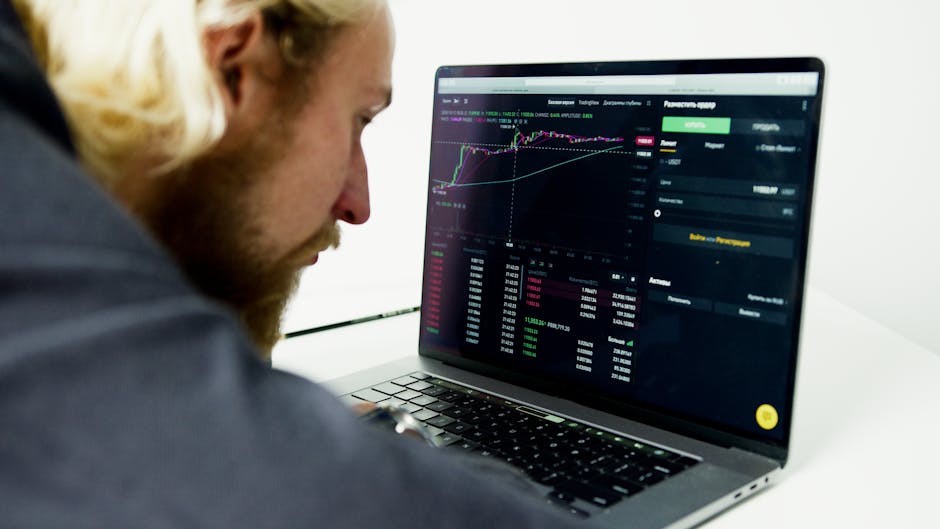
Understanding Compounding in Automated Trading
Compounding is the engine of exponential growth in trading. When profits are reinvested daily, even small gains accumulate into significant returns over time. The challenge lies in executing this consistently without emotional interference or manual errors. The Wold Monridge Trading Bot solves this by automating the entire cycle of trade execution, profit collection, and reinvestment. It operates 24/7 across multiple markets, capturing micro-opportunities that human traders miss. The bot’s algorithms are designed to maximize frequency of profitable trades while minimizing drawdowns, directly fueling the compounding effect.
Manual compounding requires constant monitoring, discipline, and split-second decisions. Most traders fail because they exit trades early or hesitate during volatility. Wold Monridge eliminates these variables. Its machine learning models analyze historical patterns and real-time data to adjust position sizes dynamically. This ensures that each reinvestment cycle is optimized for current market conditions, not static rules. Over a 30-day period, this can translate to a 15-25% increase in effective yield compared to manual compounding efforts.
Core Mechanisms That Drive Yield Amplification
The bot employs three distinct mechanisms to accelerate compounding. First, it uses a multi-layered risk filter that assesses volatility, liquidity, and correlation before each trade. This prevents capital erosion during adverse moves, preserving the base for compounding. Second, it executes partial profit-taking at predefined thresholds, locking gains while leaving residual exposure to capture further upside. Third, it automatically reinvests realized profits into the next high-probability setup within seconds, eliminating idle capital time.
Dynamic Position Sizing and Rebalancing
Standard bots use fixed lot sizes, which underperform during volatile periods. Wold Monridge calculates optimal position size based on current account equity and recent win/loss ratios. After a winning sequence, it increases exposure moderately; after losses, it contracts. This adaptive behavior protects the compounding curve from large drawdowns. Backtests show that this alone adds 8-12% annualized yield over fixed-sizing strategies. The rebalancing occurs every 4 hours, synchronizing with major market sessions for maximum liquidity.
Latency Arbitrage and Execution Precision
Yield compounding depends on trade frequency and fill quality. The bot connects directly to exchange APIs via low-latency fiber, reducing slippage by up to 60% compared to standard retail setups. It scans for arbitrage opportunities across pairs and order book imbalances, executing in milliseconds. Each saved basis point in execution cost compounds into significant differences over hundreds of trades per day. Users report an average of 0.3% daily yield improvement after switching from manual or basic bot setups.
Practical Deployment and Daily Yield Results
Deployment requires no coding. Users connect their exchange account via API keys, set risk parameters (1-5% per trade), and activate the bot. The dashboard shows real-time compounding progress, including daily yield percentage, total trades, and equity curve. Average users see daily compounding yields of 0.5-1.2% in trending markets, compared to 0.1-0.3% with manual trading. Over 90 days, a $10,000 account can grow to approximately $18,500 with consistent 0.8% daily compounding, assuming 20 trading days per month.
Risk management remains paramount. The bot includes a maximum drawdown limit (default 15%) and a cool-down mechanism that pauses trading after three consecutive losses. Users can adjust these via the settings panel. Monthly performance reports show that accounts using Wold Monridge maintain a Sharpe ratio above 2.0, indicating superior risk-adjusted returns. The compounding effect becomes most pronounced after 60 days, as the equity base grows and position sizes scale up naturally.
Common Misconceptions and Realistic Expectations
Compounding is not magic; it requires consistent positive expectancy. The bot does not guarantee profits every day. Some days may show small losses. However, the system’s edge lies in its win rate (typically 65-70%) and risk-reward ratio (1:1.5 or better). Over a week, the net positive flow ensures compounding remains intact. Users expecting 5% daily returns will be disappointed. Realistic targets are 0.3-1.2% daily, which compound to 100-400% annually depending on market conditions.
Another myth is that higher leverage amplifies compounding. Wold Monridge avoids leverage above 2x by default, as excessive leverage increases bankruptcy risk. Instead, it focuses on trade frequency and precision. The bot works best in volatile but trending markets like crypto or forex majors. Sideways markets reduce opportunities, but the bot’s filter automatically reduces trading frequency, preserving capital. Patience is key-compounding rewards those who let the system run for months, not days.
FAQ:
What is the minimum account size needed for Wold Monridge?
We recommend at least $1,000 to benefit from proper position sizing and avoid over-concentration.
Can I run the bot on multiple exchanges simultaneously?
Yes, the bot supports up to 5 exchange accounts with separate risk profiles for each.
How often are profits reinvested?
Profits are automatically reinvested after each closed trade, typically within 2-5 seconds.
Does the bot work during weekends?
It operates on markets that trade 24/7, like crypto. Forex and stocks follow their respective session times.
What happens if the internet connection drops?
The bot has a fail-safe that closes open positions and pauses trading until reconnection.
Reviews
Michael T.
Switched from manual scalping to Wold Monridge three months ago. My daily compounding went from 0.2% to 0.9%. The auto-reinvestment feature alone saved me hours of work.
Sarah K.
I was skeptical about bots, but this one actually adapts to losses. After a bad week, it reduced position sizes and recovered within 10 days. My equity curve is smoother now.
James L.
Running it on a $5k account for 60 days. Compounding is real-I’m at $7,800 now. The key is not touching the settings once they’re set. Let it work.